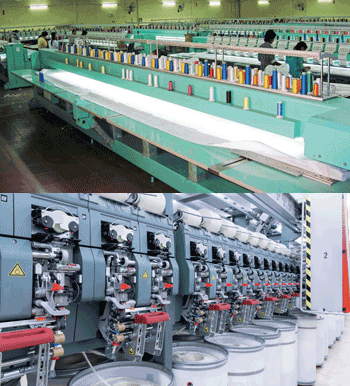
Roadmap for Indian textile machinery industry

Indian textile machinery industry has tremendous growth potential in coming future buoyed by growing domestic and global demand, says Avinash Mayekar of Suvin Advisors.

Global textile machinery market is witnessing tremendous growth buoyed by growing demand of textile and apparel market. It is forecasted to grow at a CAGR of 14.02 per cent till 2018. It is expected to reach to $207.5 billion in 2015. The major manufacturers of textile machinery are Germany, Italy, Switzerland, France and now China. China is leading in the field of textile exports today because they installed a large set-up for spinning and weaving industry. One of the major trends in the global textile machinery market is the growing number of technological innovations. The global market is divided into two parts, i.e., low cost manufacturing in developing countries (labour concentrated market) where cheap labour and lower version technology is available and high cost manufacturing in developed countries where labor is expensive and more automation is needed to reduce operation cost.

Indian textile machinery industry

The industry witnessed a growth of 8-10 per cent to Rs 22,000 crore in 2014 from Rs 20,000 crore in 2013. The size of India’s textile machinery industry is poised to double to Rs 45,000 crore in the next seven years from the present Rs 22,000 crore in light of new projects and emphasis on setting up textile parks. The textile machinery manufacturing section is one of the important segments of the machinery manufacturing industry in India. Our in-house production is insufficient to meet domestic demand.

This industry is nearly 60 years old and has more than 1,000 machinery and component manufacturing units. Nearly 300 units produce complete machinery and the remaining produce various textile machinery components. However, not all the units work to full capacity or even the optimum capacity level.

Except for the units in the spinning sector where the machinery are of international standards; in the other sectors, machinery manufacturing for weaving, knitting and wet-processing lack high level of quality standard and performance (in most of the cases) to compete with the European manufacturers.

Textile engineering goods industry is classified as follows:

  • Ginning and pressing machines
  • Spinning and allied machines
  • Synthetic filament yarn machines
  • Weaving and allied machines
  • Processing machines
  • Hosiery/RMG machines
  • Textile testing equipment
  • Multiple segments (combination of the above)
  • Accessories and parts
  • Others

In the weaving sector, shuttleless weaving machinery (rapier or airjet) and in the knitting sector (circular knitting and flat knitting) machinery hardly have any presence in the industry. The machinery manufacturing operation takes place at the organised and the unorganised sectors. In the organised sector, in addition to the public limited companies, machinery manufacturing is done in independent units, which have collaborative joint ventures with the foreign entities. In the decentralised sector, there are small-scale industrial units as well as tiny units engaged in the production of accessories pertaining to the textile machinery.

Majority of the production comes from the States of Tamil Nadu and Gujarat; collectively contributing around 84 per cent of the production. Around 87 per cent of the total production, i.e., textile machinery is coming from the six clusters namely Surat, Ahmedabad, Bengaluru, Coimbatore, Ludhiana and Mumbai. These clusters are strategically located to serve the textile industry and have the affiliation to produce the kind of machinery required by the industry. Ahmedabad is a cluster of weaving. Currently most of textile machinery is consumed within the country, so there is very less scope for the export.

There are many small and medium enterprises involve in the production of textile machinery and its parts, but there are few players who have been holding their position in field of textile machine manufacturing and they are as follow: LMW, Rieter, Prashant Gamatex, Yamuna Machine Works, Trutzschler, to name a few.

Most of the textile machinery manufacturing units are under utilisation. Not all the textile machinery manufacturing units in India work to full capacity or even the optimum capacity level.

Indian imports for textile machinery parts and accessories are growing at a CAGR of 25 per cent in last few years, whereas exports are very low as compare to imports, but it is also showing increasing trend and it is increasing at a CAGR of 36 per cent.

Domestic demand for textile machinery is increasing at a CAGR of 17 per cent over the year. The demand is increasing; but demand met by indigenous manufacturer is not even half of the total demand.

Problems faced

The major problem in the textile machinery manufacturing industry is the lack of investment in R&D, except for the manufacturing units who have technical collaboration with reputed foreign companies; no progress has been made in the quality of the machinery produced. This dependence on borrowed technology and want of research has kept most of the sectors except spinning machinery sector far behind in the standard and performance of the machinery produced. This has resulted in the import of second hand machinery especially in the area of weaving thus discouraging the advancement of technology in the manufacturing of similar machinery in India. Lack of systematic fiscal support to the industry by the Government has also added to the problems.

Growth drivers

Purchase of new machinery is the key growth driver of the market. One of the major growth drivers for global machinery market is the strong economic recovery; post-recession, increasing demand for textile products, and environment friendly fibers, and a growing demand in the developing countries. Today machinery manufacturers produce textile machineries at competitive prices, and sophisticated machines of higher speed, and production capacity. Presence of numerous small scale players also makes the machinery sector more competitive. Along with them, MNCs have also entered the global arena, taking the competition to the next level, driving companies to work on their productivity and innovation.

The global demand of textile machinery is rising due to growing demand of textile industry. Today, textile machinery sourcing is majorly done from European countries, which is relatively costly. India is strategically located from most of major textile & apparel producing countries and India has good potential to explore global opportunities & tap global market. India has to first focus on exports to the neighboring countries which are emerging as significant textile producers.

Summary

Indian textile machinery industry has tremendous growth potential in coming future buoyed by growing domestic and global demand; the only need is to identify the untapped opportunities. Though Indian machinery industry is currently having strong presence in spinning & processing sector, we have not at all explored the big opportunities in weaving sector.

The growing demands of fabric all across the world will make weaving as a booming sector in coming future. Considering, India’s strategic location, we can very well meet the demands of most of the Asian countries. Moreover, as we have large capacities of spinning yarn, this would be added advantage to India. Technical textiles is another sector which Indian manufacturers can explore as currently China is the only competition to India, amongst Asian countries.

But, due to low quality machinery supplied by China, European machineries are in demand. So, India has all potential to capitalize the opportunity.

Stable government and favourable government policies like 100 per cent FDI, gives very good opportunity for foreign machinery manufacturers for investment in India. India is definitely better option compared to China considering the cost effectiveness.

In India, there are less chances to copy & replicate the cheaper option of machine due to stringent copyright laws and Indian values. So, manufacturers are well assured for confidentiality of their machine design. Indians can explore more options of tie-up with foreign machinery manufacturers for the technology support, this will improve the standards & quality of Indian machinery.

We also need to focus more on R&D to manufacture high standard textile machinery, which is required for our own consumption first so that we can reduce imports and may think of exporting appropriate technology to other developing countries.

The Government has already declared ‘Make in India’ to boost manufacturing sector. It should also support the R&D activities and allocate special funds for development of R&D centers. Our education pattern should develop research and innovation based concepts for textile engineering students so that the real growth happens within our country.

Low material costs and operating costs along with our own huge market will give India an edge over other countries.

Avinash Mayekar is MD & CEO of Suvin Advisors.
Source : http://indiantextilejournal.com/News.aspx?nId=DjVoFeQ+/u+rBIwU2FQ9wg==&NewsType=Roadmap-for-Indian-textile-machinery-industry-India-Sector

Textile machinery industry to touch Rs 35,000 crore in 5 years

The textile industry is the second largest employer in India after agriculture.

Read more at:
//economictimes.indiatimes.com/articleshow/55693076.cms?utm_source=contentofinterest&utm_medium=text&utm_campaign=cppst

MUMBAI: The size of domestic textile machinery industry is poised to hit Rs 32,000-35,000 crore in the next five years from the present Rs 22,000 crore on the back of government initiatives like ‘Make in India’, an industry member said today.

“The textile machinery manufacturing section is one of the important segments of the industry in India,” India International Textile Machinery Exhibitions Society Chairman Sanjiv Lathia told reporters here.

“With the Government’s initiativ ..

Read more at:
//economictimes.indiatimes.com/articleshow/55693076.cms?utm_source=contentofinterest&utm_medium=text&utm_campaign=cppst

Bonanza for textile machinery units

While the textile industry in south Gujarat is passing through a downturn, manufacturers of machines for textile weaving, spinning and processing industry have been experiencing a boom time.
The need to adopt new technology for maintaining a competitive edge has forced the industry to spend more and most of the textile machinery manufacturers such as Himson, Alidhra, Premier, Sutex, Aalidhra are doing extremely well.
“Adopting latest technology is a must for any industry to maintain growth rate. The textile industry too has to keep pace with the technological advancement. Many textile businessmen go for upgradation by opting for latest machinery. Hence machinery manufacturers do not face any shortage of buyers, and do good business,” Hansraj Gondalia, the chairman of Alidhra Textile Engineers Ltd, a leading Surat-based textile machinery manufacturing company, told Business Standard.
Powerloom machinery and yarn preparatory TFO twister machines are manufactured in Surat. Spinning machines, on the other hand, have to be imported from Europe or China. The annual capital investment in the textile sector is estimated to be around Rs. 1000 crore, out of which, 25 per cent of the investment takes place in Surat alone.
Demand in the international market also helps the machinery manufacturers. “Himson Engineering, another Surat-based textile machinery producer, exports around 20 per cent of the total machines It manufactures. Alidhra exports five to seven per cent of its total production. So, in case there is recession in the domestic industry, the machinery manufacturers can negate the effect by focusing more on exports,” Gondalia said.
According to a senior official in Himson Engineering, “No industry can afford to go on using outdated machines. More and more textile businessmen realised this, on account of which, the demand for latest textile machinery went up, resulting in higher sales for us. The demand for cheaper indigenous machines has gone up in the recent years as they turned out to be as reliable as those made in Europe.”
According to Gondalia, the fact that machinery imports from China have reduced a great deal has worked in the favour of the local manufacturers. The Chinese machines are available at much lower prices.
“A large number of businessmen opted for Chinese machinery because of this, but the poor quality and reliability of these machines, soon became public knowledge. Hence, the demand for Chinese machines reduced to negligible levels, which has worked in favour of manufacturers like us, in the domestic as well as the international markets,” Gondalia said.
However, small scale machinery manufacturers do complain of occasional recession. “Himson and Alidhra are companies which have good presence in both domestic and international market. The recession in the local textile industry might not affect these companies, but the smaller manufacturers are certainly affected,” Indravadan Mahadevwala of J C Machinery, said.
‘There are over two dozen small and big machinery manufacturers in Surat, but very few have business of a scale similar to that of the two companies. Unlike the bigger companies, the smaller companies have customer base only in Surat or nearby areas, and hence any recession in the local industry does have an impact on their business.The bigger manufacturers also have a huge product profile, while the smaller companies manufacture very few types of machines. So the smaller companies are certainly affected by the recession in the textile industry,’ he added.

Source : https://www.business-standard.com/article/companies/bonanza-for-textile-machinery-units-105091301082_1.html

East Africa wants place in global supply chains

Textile was once a thriving industry in East Africa. Today, the region sees an opportunity for growth, even though the problems have not gone away. Plus, there is a China connection.

At the 10th edition of the annual textile event Origin Africa (Dar-es-Salaam, October 28-30), representatives from the cotton farming sector, the creative industries (fashion design) and several governments—all stressed the importance for East Africa to get more deeply involved in global value chains. How to get there? Easy question, difficult answer.

Textile was once a thriving industry in East Africa. And once again, according to Jas Bedi, honorary chairman of the African Cotton & Textile Industries Federation (ACTIF), it has a window of opportunity for growth.

Antoinette Tesha, director (textiles & apparel) of consulting company Msingi East Africa Ltd, from Nairobi, supports the optimistic vision of ACTIF. Msingi designed a textiles industry strategy for the Ugandan government and tried to estimate the impact of the textiles and apparel industry on exports and employment in East Africa (not including Ethiopia and other countries from the Horn of Africa) focusing on Kenya, Tanzania, Uganda and Rwanda. The Msingi consultants expect high growth rates in the East African textiles and apparel industry resulting in $2.7 billion exports and 200,000 jobs by 2030.

ICAC App for Small Farmers

The cotton boards of the East African countries are expecting much from the hundreds of thousands of small cotton farmers in East Africa. They hope that farmers will be able to at least double the yield per hectare, adapt farming practices to climate change and increase the share of organic cotton.

Kai Hughes, executive director of the International Cotton Advisory Committee (ICAC), argued during Origin Africa that seed development has to be a priority. However, small farmers don’t need Bt cotton to increase their productivity. He said: “Bt cotton does not increase yields, it only protects cotton from pests. It makes sense to grow Bt cotton in large fields of 200 hectares or more, not in the very small fields.” He pitied the African smallholder farmers who mostly don’t have any information about the impact of climate change.

ICAC wants to change this. Hughes announced the introduction of an ICAC app that will be given for free to the member governments. It will be an exceptional analytic tool which will inform smallholder cotton farmers, in their own language, about local weather forecasts and pests, and what to do about it. Hughes also insisted that the governments would have to play a more active role in teaching farmers best practices and in financing cotton research.

Though it’s generally admitted that African cotton is of fairly good quality, often it is internationally sold at a discounted price. So, it’s not surprising that many farmers shift to other crops. In Malawi, for instance, the number of cotton farmers decreased from 300,000 to 80,000 in the last few years, while cotton production fell from 100,000 metric tonnes to 15,000 metric tonnes.

Fortunately, organic cotton gets a premium price. With a share of only 1 per cent, organic cotton is still a marginal phenomenon in the global cotton market. But in Africa, organic cotton is strongly on the rise ( per cent in the last two years). According to Marco Mtunga, director-general of the Tanzania Cotton Board, in Tanzania the share of organic cotton is nearly 10 per cent. After China, India and Turkey, Tanzania is the world’s biggest producer of organic cotton. Also in Uganda, production of organic cotton is achieving high growth rates. It’s clear that organic cotton is a market niche in which East Africa can be successful.

African Cotton, African Textiles

Much to the regret of East African governments, most of the region’s cotton is exported to countries like China and India. That’s not what the governments want. They want to develop a complete cotton textile supply chain in their respective countries.

Their development strategies are not totally similar. Just like Ethiopia in the Horn of Africa, also Kenya, Tanzania and Zambia are East African countries with a strong desire not only to increase significantly their cotton production, but also to retain much more added value in the country. Some other countries, like Botswana, want to become successful garment exporters but don’t dream of building a supply chain with spinning, weaving and textile processing mills. They think it’s more realistic to import yarns and fabrics at sharp prices from the most competitive (Asian) textile countries.

Tesha remarked during Origin Africa that East Africa has a comparative advantage compared to countries like Bangladesh, Vietnam, Sri Lanka and Cambodia, which built successful garment export industries though they have never been cotton-growing countries.

In Tanzania, the government is of course happy with the growing number of jobs created by companies like JD United Manufacturing from China (denim articles, mainly for VF), the Tanzanian-Sumitomo (Japan) 50:50 joint-venture A to Z Textile Mills (knitted garments), or Mazava, a company of the Winds Group, with headquarters in Hong Kong (15,000 employees, focus on performance wear).

However, the government would be pleased if, instead of CMT (cut, make, trim) garment factories, a number of local and foreign investors would set up FOB-oriented companies in Tanzania, producing yarns, fabrics and apparel in integrated hi-tech factories that would enjoy economies of scale.

The government’s textile vision is not yet clear. Should Tanzania specialise in bed linen and napkins, or rather in clothing textiles, or in both? Should the country try to attract denim manufacturers? Or should, after all, the government of Tanzania use its scarce financial resources to boost investments in a highly labour intensive CMT garment industry? Tanzania, with its 60 million inhabitants needs jobs, the more so since President John Magufuli has urged women to stop taking birth control pills, saying the country needs more people. Comparing Tanzania with India, the consultants of Msingi East Africa pointed out that the monthly wage in Tanzania is only $90–95, around half that in India at $160–180. Also, the power cost is lower at 6–9 US dollar cents per kilowatt hour compared to 10–12 US dollar cents in India.

Thanks to the textiles policy initiated by its first president (1961–85), the legendary Julius Nyerere, Tanzania has a complete cotton-to-clothing supply chain. Will it eventually decide to make a priority of the development and modernisation of the textile and garment sector?

Adam Zuku, CEO of Tegamat, the Textile and Garments Manufacturers Association of Tanzania, says: “The government has the intention to boost the sector. Now, action must follow. And action means money.” Mtunga confirms that the government is ready to take action.

Designers Want Recognition

As never before, female fashion designers raised their voice during Origin Africa 2019. After having listened to some speeches, they criticised the (male) sector experts and even the Tanzanian deputy minister of industries Stella Manyanya for not referring to the potentially important role of fashion design in the regional cotton-to-clothing supply chains and in service-oriented garment exporting factories. The minister was, however, warmly applauded when she proposed that Tanzanians should be encouraged to wear traditional clothing every Friday and Sunday, the holy days of respectively Muslims and Christians.

Tanzanian fashion designer and entrepreneur Kemi Kalikawe (brand Naledi) reacted: “When experts talk about the future of the African cotton-to-apparel value chain, not only the smallholder cotton farmers but also the designers are mostly forgotten. However, at the end of the day, we the designers are the ones who create most value. Unfortunately, in my country this is not recognised by the government and by the large clothing companies. I went to India and saw there that designers can work with factories and that factories want to work with designers. At the same time, I learnt that East African designers lack up-to-date training for working with factories and brands. We should learn making patterns and using CAD. Unfortunately, here in Tanzania we don’t even have fashion schools. That’s why I founded the Naledi Fashion Institute and the Naledi Fashion Incubator.”

Tanzanian designer Jamilla Vera Swai remarked: “International designers and brands are very interested in our creations and shows. However, though they get inspiration from us, our creative work is not respected or rewarded as intellectual property.” Tesha stressed that African fashion is one of the few fashions worldwide to have a strong identity. She pleaded for keeping this precious heritage alive.

A key event making East African fashion visible to the world is the annual Swahili Fashion Week, which this year will take place in Dar-es-Salaam from December 6 to 8. The event was launched in 2008 by Mustafa Hassanali, the chairman of the Tanzanian Fashion Association.

Africa United in AfCFTA

On May 30, Africa made history as the agreement establishing the African Continental Free Trade Area (AfCFTA) officially entered into force. With 54 of the 55 member states of the African Union signing the agreement (small Eritrea is the only exception), Africa brought into being the largest trading bloc since the formation of the WTO in 1995. The bloc will unite 1.3 billion people, create a $3.4 trillion economy and boost trade within the continent itself. Experts say that African and international investors will both benefit from the agreement, as AfCFTA will make it easier for businesses to expand operations across the continent.

Many observers are sceptical. They point to the meagre results of existing regional trade agreements. In East Africa, inter-country trade remained modest in spite of EAC (East African Community), COMESA (Common Market for Eastern and Southern Africa) and SADC (Southern African Development Community). Sceptics are wondering how many years it will take for the AfCFTA to function effectively. The rules of origin are still to be negotiated and many obstacles need to be removed. What’s the use of 90 per cent tariff liberalisation between two countries by July 1, 2020 if no navigable roads connect these countries?

China is said to have played a role in the AfCFTA trade pact. In 2017, China-Africa trade amounted to nearly $150 billion. Tesha points out that in the coming years China will reduce its textiles and clothing exports by more than $50 billion. First, Chinese textiles and clothing groups will probably continue relying on Southeast Asia for alternative production and export capacities. But since this region is rapidly becoming too expensive, within ten years East Africa will be the preferred investment region of the Chinese.

In Ethiopia, the Addis Ababa- Djibouti railway, constructed by China Railway Group with complete adoption of Chinese railway standard and equipment, is a demonstration project of China-Africa industrial capacity cooperation. The $4 billion railway of 752 km, which started commercial operations in January 2018, reduces transport time and costs—for Chinese yarns and fabrics and other textile materials entering Africa via the port of Djibouti and garments manufactured in Ethiopia to be shipped to consumer markets.

In Tanzania, a $10 billion project to build a new modern seaport in Bagamoyo, some 50 km north of Dar-es-Salaam, is backed by the state-owned China Merchants Port and an Omani sovereign wealth fund. It will include a special economic zone. In 2018, the project got the go ahead. However, in October 2019, the government of Tanzania has issued an ultimatum to the Chinese investor to either accept and work with its terms and conditions of the contract or leave.

American entrepreneur and consultant Samuel Meeks (ex-international training director at Levi Strauss International, now CEO of GCI, Garment Consulting International), who lives in Madagascar, sees soaring interest from Chinese groups. He predicts that within two or three years, Madagascar will be Africa’s biggest apparel exporter under the AGOA (African Growth and Opportunity Act), beating Kenya and all other AGOA-entitled African countries.

It’s difficult to predict what will be the impact on Mauritius’ well-developed apparel sector of the free trade agreement that the island country on October 17 signed with China. Will Chinese textile groups use Mauritius and its production base in Madagascar as a base to do business in the AfCFTA?

Source : https://www.fibre2fashion.com/industry-article/8503/east-africa-wants-place-in-global-supply-chains

Bangladesh to allow transhipment of Indian goods from Jan

Pic : Shutterstock

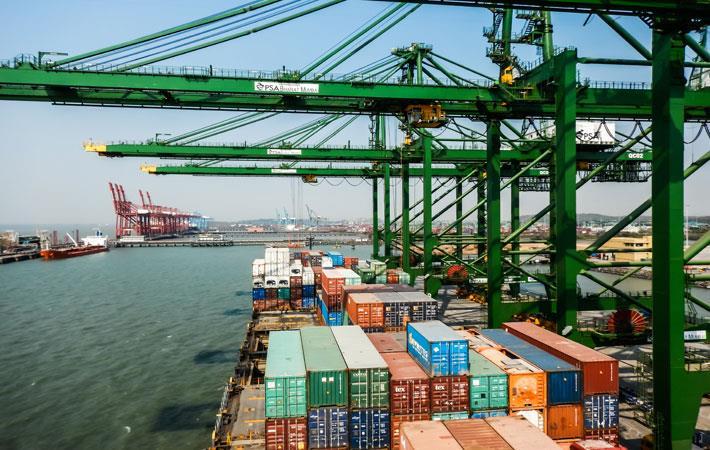
Bangladesh will allow transhipment of Indian goods via Chittagong and Mongla sea ports from January without charging customs duties and transit fees. The decision, a new development, was agreed upon when Bangladesh shipping secretary Mohammad Abdus Samad met his Indian counterpart Gopal Krishna at the shipping secretary-level talks in Dhaka recently.

Earlier, the standard operating procedures to allow transhipment of Indian goods to and fro from landlocked north-eastern states was agreed upon during Prime Minister Sheikh Hasina’s visit to Delhi in October.

Bangladesh reportedly expects such connectivity to open up greater economic opportunities, strengthen infrastructure and boost business.

India will, however, pay duties and taxes as per Bangladesh’s tariff schedule for ports. It will also pay fees for using roads in line with the policy of the Bangladesh road and highways division, according to media reports on both sides.

Seven routes have been suggested for the movement of goods and passenger vessels between north-eastern states and two ports.

These include Chittagong Port or Mongla Port to Agartala via Akhaura; Chittagong or Mongla port to Dawki via Tamabil; Chittagong or Mongla port to Sutarkandi via Sheola; and Chittagong or Mongla to Bibekbazar via Simantapur.

Meanwhile, passengers travelling on cruise ships to India and Bangladesh will get on-arrival visas at the ports.

Operations of cruise ships from Narayanganj (Bangladesh) to Kolkata began on a trial basis in March this year.

Source : https://www.fibre2fashion.com/news/textile-news/bangladesh-to-allow-transhipment-of-indian-goods-from-jan-254127-newsdetails.htm

Kenyan cabinet approves commercial farming of Bt cotton

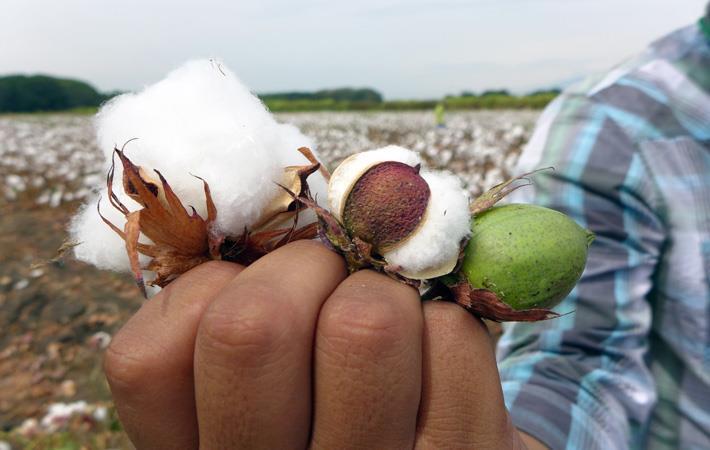
The Kenyan cabinet recently approved the commercial farming of Bt cotton hybrids following the successful completion of field trials over five years. This was done to ensure farmers earn more from the crop through increased production. It will also boost the manufacturing pillar of the government’s Big 4 Agenda, the president’s office said in a statement. Kenya seeks to establish itself as a regional leader in textile and apparel production.

The cabinet meeting chaired by President Uhuru Kenyatta also approved the coming into operation of the New Kenya Planters Cooperative Union (KPCU).

The cabinet also discussed the issue of pending bills and reiterated that all arms of the government should move quickly to settle all bills that were audited and verified by the office of the auditor general.

Source : https://www.fibre2fashion.com/news/textile-news/kenyan-cabinet-approves-commercial-farming-of-bt-cotton-254129-newsdetails.htm

Egyptian Cotton & Textile Industries to merge subsidiaries

Pic : Shutterstock

Egypt’s Cotton & Textile Industries Holding Company recently signed a contract with PwC under which the latter will provide accounting, legal and tax advice to the firm for the planned merger of its subsidiaries and implementation of restructuring. Its subsidiaries are planned to be merged into nine textile firms and one company for cotton grinning and trade.

Warner Consulting recommended merging the company’s 22 textile units and 9 units for ginning and trade of cotton, according to an Egyptian English-language daily.